
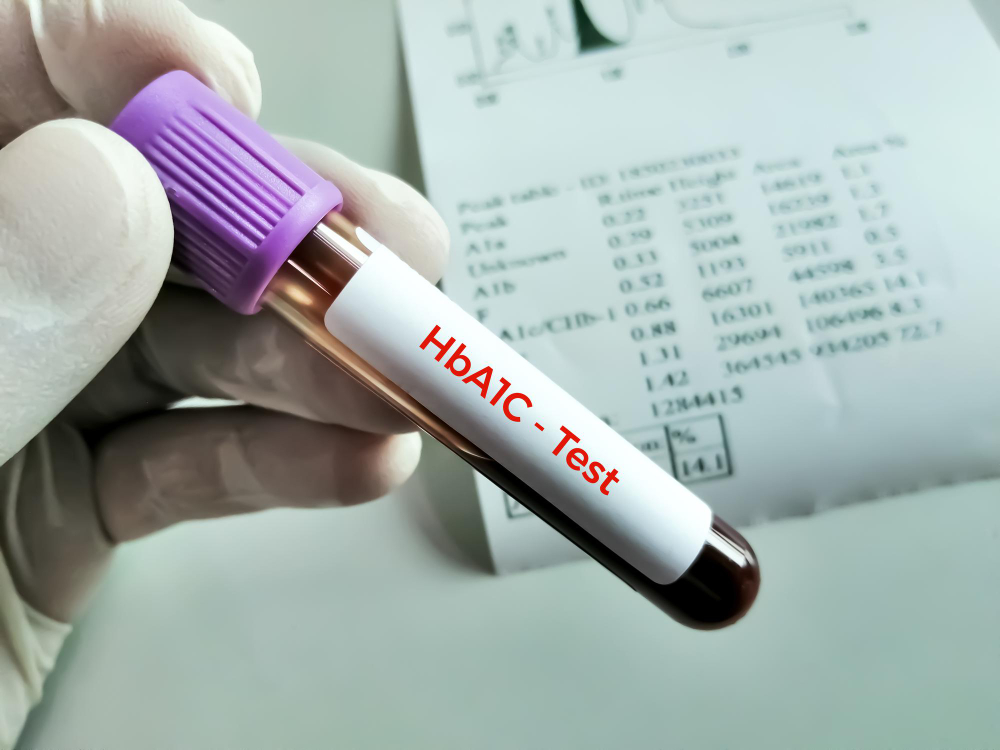
The glycated hemoglobin test, also called the HbA1c test, measures your average blood sugar over the past two to three months. Doctors use this test to check for diabetes and to see how well your blood sugar is controlled. Because it gives a long-term view, the glycated hemoglobin test is very important for people with diabetes. In fact, it is a key tool for both diagnosis and ongoing care.
This test helps find out if you have diabetes or if your blood sugar is too high. It also shows how well your treatment plan is working. For example, if your HbA1c is high, your doctor may suggest changes to your medicine or diet. According to the CDC, keeping your HbA1c in a healthy range lowers your risk of problems like heart disease, nerve damage, and kidney issues. Therefore, the glycated hemoglobin test for diabetes is a vital part of staying healthy.
The HbA1c test is simple and quick. Usually, a nurse or lab worker takes a small blood sample from your arm or finger. You do not need to fast before this test. After the sample is collected, it is sent to a lab. Results are often ready within a day or two. Because the test is easy, many people get it done during a regular doctor visit.
Many people benefit from the glycated hemoglobin test. For instance, your doctor may recommend it if you:
In addition, the American Diabetes Association suggests testing at least twice a year for people with stable diabetes. However, you may need it more often if your treatment changes.
The HbA1c test meaning is simple: it shows the percentage of sugar attached to your red blood cells. Here is how to read your results:
For most people with diabetes, the goal is to keep HbA1c below 7%. However, your target may be different based on your health. If your number is high, it means your blood sugar has been high for several months. Lowering your HbA1c can help prevent health problems.
Good news: you do not need to do much to get ready for the glycated hemoglobin test. You can eat and drink as usual before the test. However, let your doctor know about any medicines you take. Some conditions, like anemia, may affect your results. Therefore, always share your full medical history with your healthcare provider.
Even if you do not have diabetes, you can take steps to keep your blood sugar healthy. For example, these tips may help lower HbA1c and prevent diabetes:
In summary, small changes can make a big difference in your health. If you want to know more about how to lower HbA1c, talk to your healthcare provider.
Consult a healthcare professional like Dr. Imrose Suleman for personalized advice about the glycated hemoglobin test.